




Executive summary: A hotel business plan designed to increase sales and profit
Your executive summary should clearly explain how your hotel business plan will drive sales and profit while keeping guests happy. Keep it simple, short and focused on the goals.
Mission linking guest value with revenue goals
The mission should connect guest satisfaction with strong revenue. For example: “We provide memorable stays and warm service while building steady profit.” This balance shows that guest value and sales work together.
Quick targets: occupancy, ADR, RevPAR, and net profit goals
Set clear and measurable targets. Aim for occupancy around 75–80% within the first two years. Increase your Average Daily Rate by 3–5% each year to stay profitable. Track RevPAR closely, since it reflects both occupancy and rate growth. Finally, target a net profit margin of 5–15%, depending on your market and hotel size.
Market summary and target guest segments that drive profitable sales
Local demand map: tourists, business travelers, groups, and event-driven spikes
A strong hotel business plan that boosts sales and profits begins with knowing who visits and why. Tourists, business travelers, groups, and events each drive demand differently. Local tourism data, airport traffic, and event calendars reveal busy and slow seasons. Tourists may seek attractions, business guests need meeting space, and groups want block rooms or packages. Understanding each segment allows you to shape offers that match their needs and increase bookings.
Competitor pricing snapshot and distribution mix
Study nearby hotels to see how they price rooms and attract guests. Track their average daily rates, reviews, and service mix. This shows gaps you can fill, whether through value, quality, or pricing. Also, check where their bookings come from—OTAs, direct websites, or agents. Knowing this mix helps you adjust strategies, reduce commission costs, and push more direct bookings.
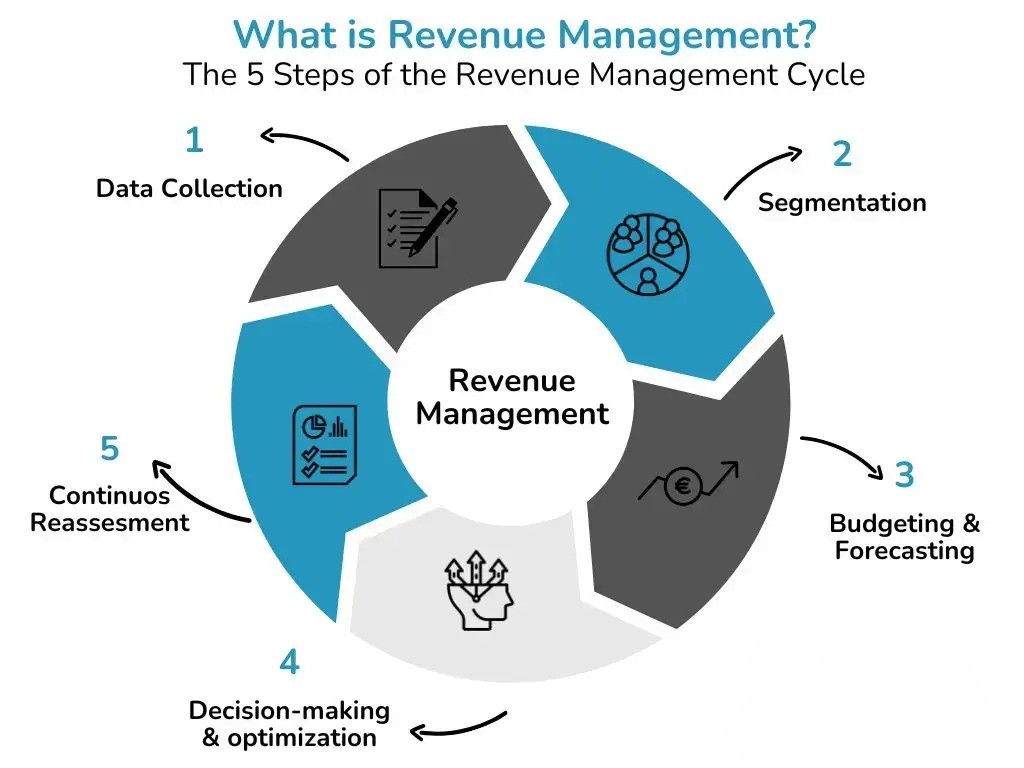
Revenue Model and Financial Priorities to Boost Profits Fast
Core Room Revenue vs. Ancillary Revenue
Hotels earn money mainly from two sources: room sales and extra services. Core room revenue comes from selling rooms and forms the backbone of hotel income. Maximizing it means setting smart rates, filling rooms, and managing booking channels efficiently. Ancillary revenue comes from extras like food, drinks, spa treatments, parking, or event hosting. Bundled packages or add-ons can boost total earnings while improving the guest experience. Balancing both streams ensures steady income and stronger profits.
Key KPIs: Occupancy, ADR, RevPAR, and GOPPAR
Occupancy Rate shows what percentage of rooms are filled. ADR (Average Daily Rate) measures the average income per occupied room. RevPAR (Revenue per Available Room) combines both occupancy and ADR to track overall room performance. GOPPAR (Gross Operating Profit per Available Room) considers total revenue minus operating costs, giving a true picture of profitability. Monitoring these numbers helps hotel owners make smart pricing and sales decisions to grow profits efficiently.
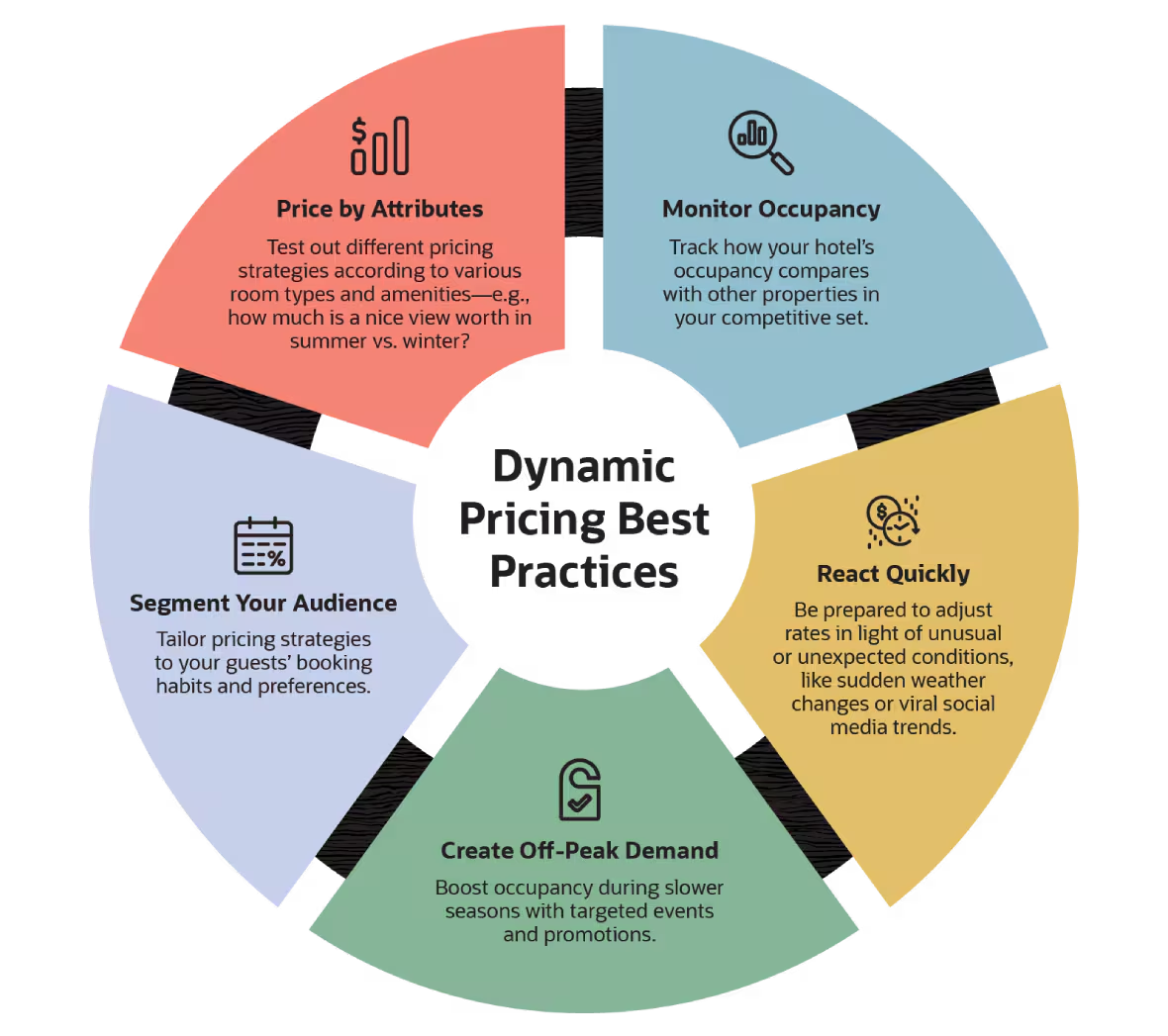
Pricing and Revenue Management Strategy That Raises ADR and RevPAR
Dynamic Pricing Basics and Seasonal Rate Plans
Dynamic pricing means adjusting room rates based on demand. Raise prices during busy seasons or events to boost revenue. Lower rates during slow periods to keep rooms filled. Seasonal rate plans divide the year into peak, shoulder, and off-peak periods. This ensures steady bookings and maximizes profits throughout the year.
Tactical Tools: Rate Fences, Non-Refundable Rates and Packages
-
Rate Fences: Offer discounts with conditions, like minimum-night stays or advance booking. It helps target different guest types.
-
Non-Refundable Rates: Lower-priced, non-refundable rooms attract budget-conscious guests while securing revenue upfront.
-
Packages: Bundle rooms with meals, spa, or tours to increase spending and overall profit.
Using these tactics carefully can lift both ADR and RevPAR while keeping guests happy.
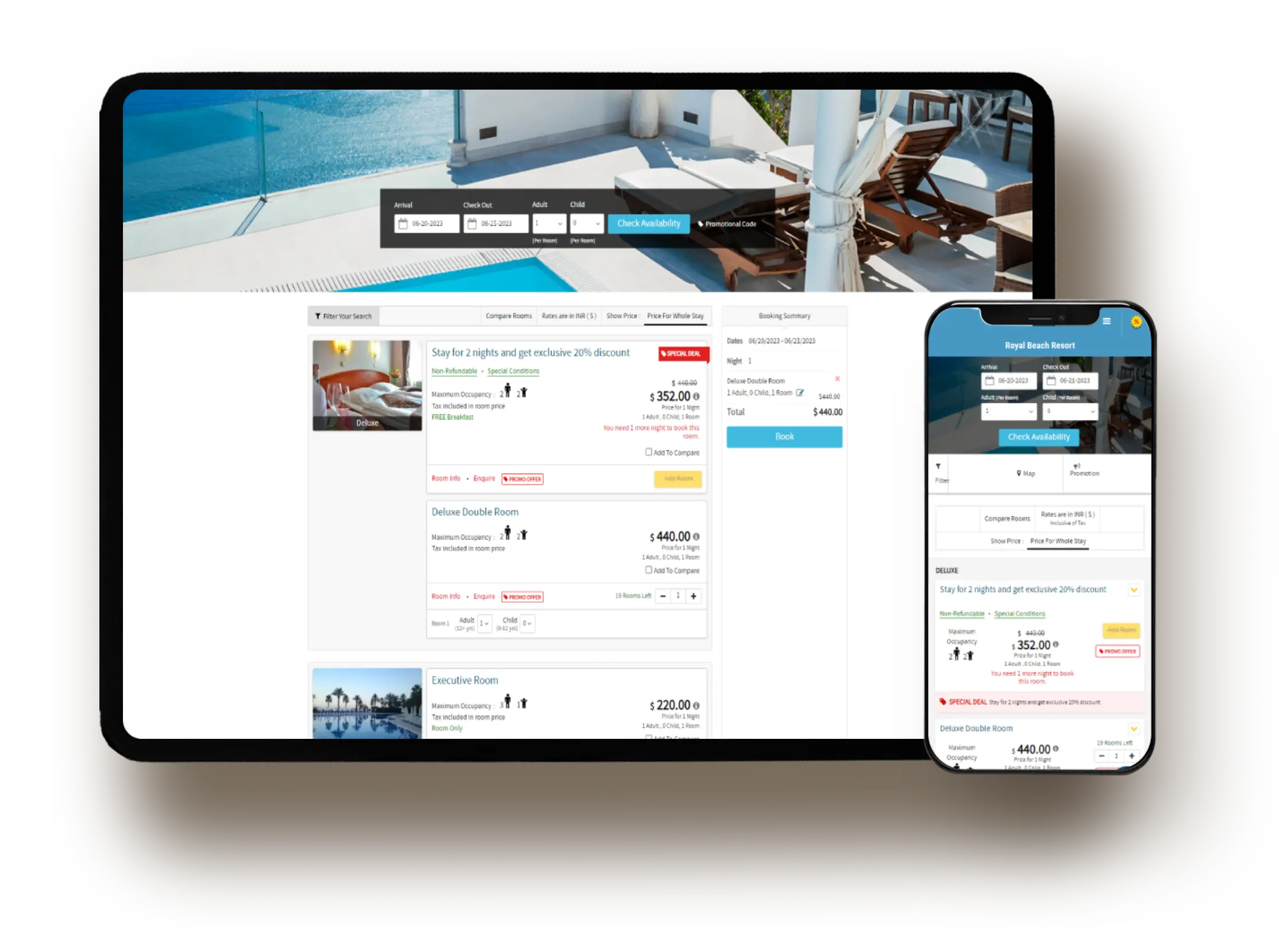
Distribution Plan: More Direct Bookings, Fewer Commission Fees
Relying too much on OTAs can eat into profits. Focusing on direct bookings saves money and builds stronger guest relationships.
Website Conversion Playbook and Booking Engine Essentials
Your website is your hotel’s digital storefront. Make it easy for visitors to book by:
-
Ensuring mobile-friendly pages that load fast.
-
Adding clear “Book Now” buttons.
-
Showing real-time room availability and rates.
-
Offering simple, secure payment options.
A smooth booking experience encourages guests to reserve directly, boosting revenue.
OTA Strategy: Balance Between OTAs and Direct Bookings
OTAs help reach more travelers but can reduce profits. Balance by:
-
Choosing OTAs wisely and tracking performance.
-
Offering perks for direct bookings like discounts or extras.
-
Using guest data from direct bookings to personalize offers.
This approach maximizes exposure while keeping more revenue in your hotel’s pocket.

Marketing & Sales Campaigns That Convert Browsers into Guests
Turning browsers into paying guests requires smart, simple marketing. Hotels can attract more bookings with local SEO, personalized emails, and loyalty perks.
SEO & Content: Local Pages and Packages
Optimize your website for local searches like “hotels near [landmark]” to appear in guest searches. Create attractive packages combining rooms with experiences, such as city tours or spa offers. Share helpful content about local events, attractions, and tips to engage visitors and boost search visibility.
Email & CRM Flows: Nurturing Guests
Use guest data to send personalized emails. Automated pre-arrival, in-stay, and post-stay messages keep guests engaged. Segment campaigns based on preferences and booking history to increase repeat bookings. Track open and click rates to improve results over time.
Loyalty Perks: Increasing Guest Lifetime Value
Offer rewards like room upgrades, early check-in, or special discounts. Give members exclusive access to deals or events. Listen to their feedback to make the program more meaningful and encourage repeat visits.
These simple, human-centered strategies turn casual visitors into loyal, returning guests.
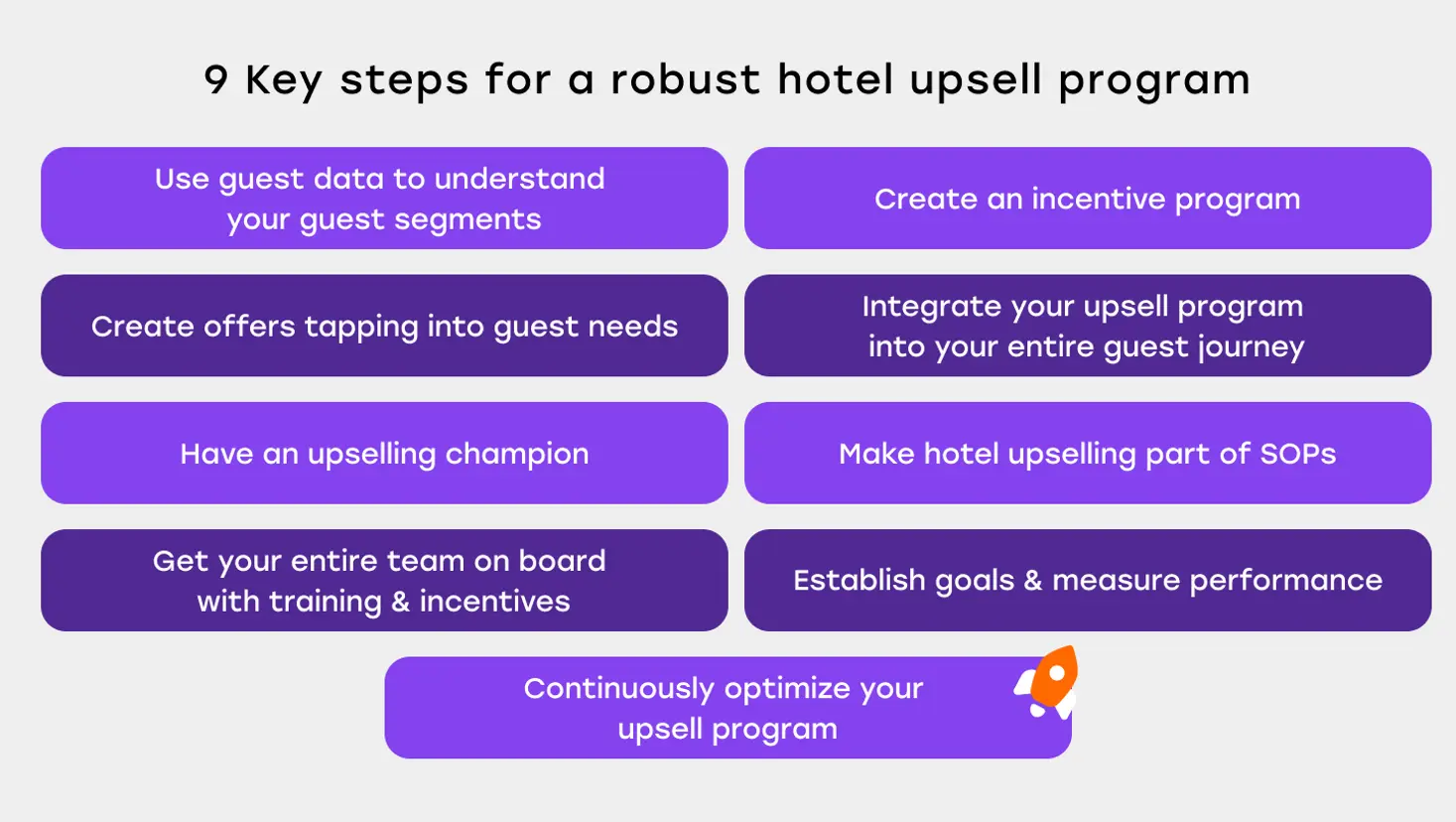
Upselling, Cross-Selling, and Ancillary Revenue: Boost Profit Per Stay
Room Upgrades, Early Check-In, and Late Check-Out
Offering room upgrades, early check-in, or late check-out adds convenience for guests and extra revenue for your hotel. Present these options clearly during booking or check-in, and tailor offers to guest preferences to increase acceptance.
Food, Spa, and Local Experiences as Revenue Streams
Additional services like dining, spa treatments, or curated local experiences can significantly boost income. Promote these options in the room, at check-in, or during booking, and highlight how they enhance the guest experience.

Guest Experience and Reputation Management That Protect Rates
Keeping guests happy and managing your hotel’s reputation are key to maintaining higher room rates. Guests pay more when they feel valued and enjoy a memorable stay. Every interaction—from booking to checkout—shapes how they perceive your hotel.
Premium Experience Design to Justify Higher Pricing
A premium stay isn’t just about fancy amenities. Focus on:
-
Personal touches: Remember guest preferences and offer small surprises.
-
Comfort and style: Create cozy, inviting spaces with thoughtful design.
-
High-quality amenities: Use quality linens, toiletries, and well-maintained facilities.
-
Easy tech: Simple check-in, smart room controls, and smooth service.
These details make guests feel special and willing to pay more.
Reviews and Fast Response Playbook
Online reviews influence bookings and rates. Keep your reputation strong by:
-
Checking reviews often and responding quickly.
-
Acknowledging concerns and showing you take action.
-
Encouraging feedback from happy guests.
-
Sharing positive reviews to build trust with new guests.
Prompt, thoughtful responses protect your reputation and help maintain higher pricing.

Hidden Strategies Most Hotels Overlook
Micro-Demand Arbitrage: Capturing Hidden Local Demand Spikes
Micro-demand arbitrage means spotting short-term local events that boost hotel bookings, like festivals, conferences, or nearby construction projects. Hotels can adjust rates in real time to match these sudden spikes. Targeted marketing during these events helps attract the right guests. Using this approach can raise occupancy and increase average daily rates, adding profit without heavy marketing spend.
Non-Guest Subscriptions and Co-Working Memberships as Steady Revenue
Hotels can earn extra income by offering memberships for co-working spaces, gyms, or spa access to locals and remote workers. Recurring subscriptions create steady revenue and build community loyalty. Tiered packages with perks appeal to different customer needs. Promoting these programs through social media or local partnerships can attract more members and reduce reliance on seasonal bookings.
FAQs — Hotel Business Plan That Boosts Sales and Profits
1. What is the main purpose of a hotel business plan?
A hotel business plan is a roadmap to attract guests, manage operations, and boost revenue and profits.
2. How can I spot local demand spikes?
Keep an eye on events, festivals, or local projects. Adjust pricing and promotions to capture sudden booking surges.
3. Why is dynamic pricing important?
Dynamic pricing lets you change room rates based on demand and competition, helping you maximize income per room.
4. Can non-guest memberships help revenue?
Yes. Offering access to co-working spaces, gyms, or spa services to locals creates a steady income stream.
5. What marketing strategies work best for hotels?
Use a mix of website optimization, local SEO, social media, and targeted digital campaigns to attract more guests.
6. Why know your target market?
Understanding your guests helps tailor services and experiences, increasing satisfaction, repeat bookings, and loyalty.
7. Which financial metrics matter most?
Track occupancy, average daily rate (ADR), revenue per available room (RevPAR), and profit per room to measure success.
8. How does technology improve hotel profits?
Hotel management and revenue systems streamline operations, enhance guest experience, and help make smarter pricing decisions.
9. Why diversify hotel revenue streams?
Extra services like events, food & beverage, or local tours reduce reliance on room bookings and increase total income.
10. How often should a hotel business plan be updated?
Review the plan at least once a year or when market conditions change to stay competitive and profitable.
Conclusion
A hotel business plan that boosts sales and profits is about more than filling rooms—it’s about building a strong, sustainable business. By using smart pricing, improving the guest experience, and exploring new revenue streams, hotels can increase both bookings and income. Regularly checking results and adjusting strategies keeps the business flexible and profitable. With a clear plan and simple, practical steps, any hotel can thrive in a competitive market. Start taking action today, and watch your hotel grow into a successful, revenue-driving operation.