



Zero Trust Architecture (ZTA) is a method for keeping your data safe by adhering to the principle of “never trust, always verify.” In traditional security, once someone gains access to the network, they are automatically trusted. However, with ZTA, no one is trusted until they prove themselves to be safe. Every time someone or something tries to access your data, they must demonstrate that they are authorized to do so. This differs from traditional security methods, where people within the network were trusted. ZTA checks everything all the time to make sure no one can sneak in. With the rise of cyberattacks, such as hacking and phishing, ZTA helps keep your information safe.
In this article, you will learn about how Zero Trust works, its importance, and how to implement it.
The Basics of Zero Trust Architecture
How Does Zero Trust Architecture Work?
The core of Zero Trust is the idea that nothing inside or outside your network should be trusted by default. Instead of assuming that users or devices are secure because they are inside the network perimeter, Zero Trust requires them to prove their legitimacy every time they attempt to access a resource.
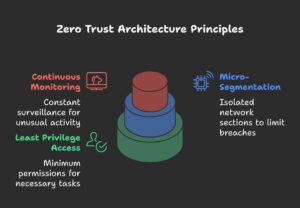
This means that constant monitoring is essential. The network continuously checks and verifies that users, devices, and traffic are authorized to ensure that nothing harmful can get through unnoticed.
Core Principles of ZTA
Least Privilege Access
One of the key principles of ZTA is the principle of least privilege, which ensures that access is granted only to the minimum necessary. This means users and devices only receive the minimum permissions required to perform their tasks. A marketing team member shouldn’t have access to financial records. By limiting access, even if a device or account is compromised, the damage is minimized.
Micro-Segmentation
ZTA uses micro-segmentation to break the network into smaller, isolated sections. This helps prevent attackers from moving freely across the entire network if one part is compromised. A compromised endpoint doesn’t automatically grant access to the whole network; additional layers of verification act as a Zero Trust Architecture (ZTA) doesn’t just check who you are when you first log in—it keeps an eye on users and devices the whole time. This constant monitoring makes it easier to identify any unusual activity, such as signs of a potential security threat. Think of it as regular checkups that make sure everything stays safe and protected.
Continuous Monitoring and Authentication
Zero Trust Architecture (ZTA) doesn’t just check who you are when you first log in—it keeps an eye on users and devices the whole time. This constant monitoring makes it easier to identify any unusual activity, such as signs of a potential security threat. Think of it as regular checkups that make sure everything stays safe and protected.
The Benefits of Zero Trust Architecture
Enhanced Security Against Cyberattacks
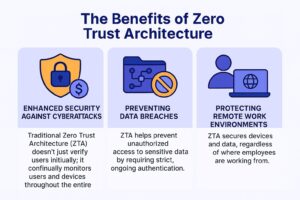
One of the most significant advantages of Zero Trust is its ability to stop cyberattacks. Traditional Zero Trust Architecture (ZTA) doesn’t just verify who you are when you first log in; it continually monitors users and devices throughout the entire network. This constant monitoring makes it easier to identify anything unusual, such as signs of a potential security threat. Think of it as regular checkups that make sure everything stays safe and protected.
Preventing Data Breaches
ZTA helps prevent unauthorized access to sensitive data by requiring strict, ongoing authentication.
Suppose an attacker steals an employee’s credentials. In traditional models, a hacker could use these credentials to access a company’s system, causing a data breach. In a Zero Trust model, even if credentials are stolen, the hacker would still need to pass multiple authentication checks, making it far more challenging to gain access.
Protecting Remote Work Environments
As remote work continues to rise, securing employees working from various locations becomes more challenging. ZTA is especially beneficial here because it secures devices and data, regardless of their location. Whether an employee is working remotely from a coffee shop or their home office, Zero Trust protects the network by allowing access only to authenticated users and secure devices, regardless of the location.
How Zero Trust Architecture Differs from Traditional Security
Traditional Security Models vs. Zero Trust
Traditional security works a lot like a castle. If someone gets past the walls, they’re trusted to move around freely inside. The problem is that once a hacker gains access, they can often access almost everything. Zero Trust takes a very different approach. Instead of assuming anyone inside is safe, it continually checks and verifies every user and device, regardless of whether they’re inside or outside the network. This way, it lowers the chance of insider threats and makes it much harder for attackers to move around unnoticed.
Why ZTA Is More Effective Today
Businesses today are more connected than ever before. They rely on cloud services, remote teams, and complex networks that traditional security methods cannot keep up with. Because threats can come from both within and outside the company, many organizations are adopting Zero Trust security. This approach works by constantly checking who’s accessing what and breaking networks into smaller, safer sections—making it much harder for attackers to slip through.
Key Technologies Behind Zero Trust Architecture
Identity and Access Management
Identity and Access Management systems work like digital security guards for businesses. They verify who’s attempting to log in—whether it’s a person or a device—before granting access to sensitive information. In short, it keeps sensitive files in the hands of the people who are supposed to see them. MFA adds an extra safety step, like typing in a code from your phone, so it’s not just about remembering a password.
Encryption
Encryption plays a significant role in Zero Trust Architecture (ZTA). It works like a secret code—turning sensitive information into a format that only those with the right “key” can read. With ZTA, your data remains protected whether it’s stored or in transit across a network, making it more difficult for unauthorized access.
Behavioral Analytics
Behavioral analytics watches how people and devices usually behave. If something unusual happens—like a login attempt from an unfamiliar location—the system quickly sends an alert or blocks it. Identifying these warning signs early can prevent security problems before they escalate into more significant issues.
How to Implement Zero Trust Architecture
Step 1: Understand Your Current Network
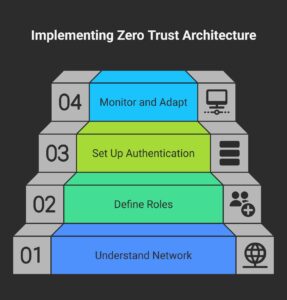
Before implementing Zero Trust, you need to map out your network. Identify what data is critical and which users and devices need access to it. This helps establish clear boundaries for what should be protected and how ZTA should be applied.
Step 2: Define User Roles and Permissions
Apply the principle of least privilege to define roles. Minimize the risk of unnecessary access by ensuring that users have access to only the resources necessary to execute their jobs.
Step 3: Set Up Strong Authentication and Encryption
To protect your network, set up strong authentication methods like passwords and MFA. Encrypt data to safeguard it both during storage and transfer.
Step 4: Continuously Monitor and Adapt
ZTA is not a one-time setup. It requires ongoing monitoring to ensure new threats are detected and mitigated promptly. Regularly assess your security protocols and adjust them to address emerging risks as they arise.
Common Challenges in Implementing Zero Trust Architecture
Cost and Resources
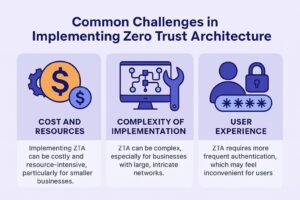
Implementing ZTA can be costly and resource-intensive, particularly for smaller businesses. However, you can start small by focusing on protecting critical data and scaling up as needed.
Complexity of Implementation
ZTA can be complex, especially for businesses with large, intricate networks. Collaborating with cybersecurity experts or utilizing managed services can simplify the process.
User Experience
ZTA requires more frequent authentication, which may feel inconvenient for users. However, the security benefits far outweigh the inconvenience, ensuring your network remains safe.
Case Studies on Zero Trust Architecture
Not many firms can say that Zero Trust Architecture (ZTA) has substantially changed their cybersecurity, but a few are doing it. Companies like Microsoft, Cisco, Akamai, and Surespan have all used ZTA in some form to substantially change user or system access controls.
Microsoft applied ZTA to help ensure that only trusted users can access their systems, regardless of the device. This method improved security through identity verification and strict access controls, requiring all devices to be considered untrusted until proven otherwise, significantly reducing the risk of unauthorized access and data breaches.
Cisco used ZTA with tools like Duo Network Gateway to secure remote access, ensuring only authorized users could connect to their systems.
Akamai moved beyond traditional VPNs to a ZTA model, which increases security but does not compromise end-user quality.
Surespan also enhanced its global operations and security by adopting a more connected approach through ZTNA. All of these examples of Zero Trust models have been adapted to suit their particular businesses; none reported any significant negative impacts on productivity or bottom-line costs, provided they implemented ZTA to suit their needs. You don’t have to be a tech firm either, as the examples show that firms from various industry sectors are embracing these models.
FAQ
What is Zero Trust Architecture?
Zero Trust is a security model that assumes no user or device should be trusted by default — even if they’re inside the network perimeter. Every access request is thoroughly verified before entry is granted.
2. Why is Zero Trust important for businesses?
It reduces the risk of data breaches, insider threats, and lateral movement of attackers. This is especially vital for small businesses with limited IT resources.
3. How does Zero Trust differ from traditional security?
Traditional security often relies on a “castle-and-moat” approach, where anything inside the network is trusted. Zero Trust continuously verifies all access requests, regardless of their location.
5. Does Zero Trust require new technology?
Not always — it can start with policy changes and existing tools, such as MFA, VPN replacements, and identity management solutions, and then expand with advanced solutions as needed.
Conclusion
Losing important files can feel like losing a part of your life. But with the 3-2-1 backup rule, you don’t have to worry. It’s an innovative, easy way to keep your data safe—whether you’re a student, a parent, or a small business owner.
Just remember:
- 3 copies of your data
- 2 types of storage
- **1 copy stored far away
This rule is like a superhero cape for your files: silent, dependable, and always ready to save the day. So, don’t wait till a disaster strikes. Start your backup plan today to protect what matters most.